How to Test Video Content Before Posting It Publicly
Introduction: The Curation Problem Nobody Talks About
Learning to test video content before posting resolves a tension every serious account eventually hits: experimentation demands volume, while a credible profile demands curation. Crucially, most creators resolve it badly — they either stop experimenting to protect the grid, or they post everything and let the profile become a graveyard of failed tests.
Therefore, this guide covers the tools that separate distribution from display, the experiments worth running, how to read the results, and the cheaper testing methods available on any platform. Additionally, we look at a TikTok option currently in testing that would extend the same idea further.
Why You Should Test Video Content Before Posting
Three distinct costs make untested publishing expensive.
The First Reason to Test Video Content Before Posting: Profile Credibility
New visitors judge your account from the grid, and a run of weak posts undermines the impression your best work creates. Furthermore, that judgement happens in seconds and rarely gets revisited.
Audience Signal Pollution
Posting content your audience ignores teaches the recommendation system something you did not intend about who to serve you to. Consequently, repeated mismatched experiments can blunt your distribution for weeks.
The Sunk-Cost Trap
Creators who post everything become reluctant to try formats that might fail, which is precisely backwards. Therefore, separating the test from the permanent record restores your willingness to experiment.
The Tools That Separate Distribution From Display
Two platforms now offer versions of the same idea.
Instagram Trial Reels
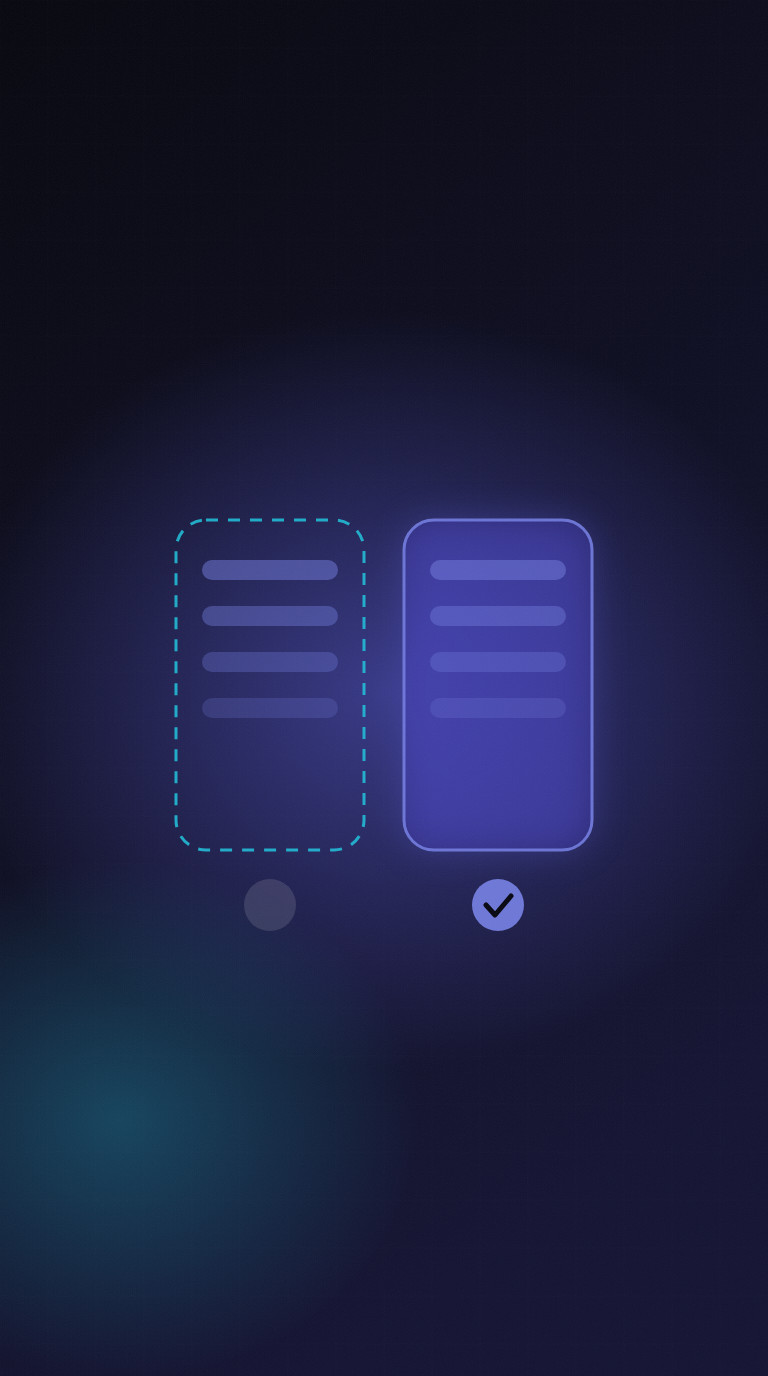
Trial Reels distribute a Reel to non-followers without showing it to your existing audience or placing it on your grid, letting you judge performance before committing. Consequently, this is the most established version of the mechanism available today.
TikTok's Profile-Free Option Is Reportedly in Testing
Reports describe TikTok testing an option that would let a video circulate in the feed without appearing on the creator's profile grid. Nevertheless, this has been observed in testing rather than formally announced, so treat it as a possibility rather than a feature to plan around — check TikTok's own creator documentation for anything confirmed: the TikTok Creator Portal
What They Do Not Do
Neither mechanism hides a video from everyone, and neither protects you from a poorly judged post being seen and screenshotted. Therefore, these are curation tools rather than privacy tools.
An Illustrative Example
Consider an illustrative fitness creator whose grid mixed polished technique videos with impulsive commentary posts. Profile visits converted to follows at a low rate despite decent reach. The creator moved all commentary experiments into trial distribution for six weeks, promoting only the two formats that outperformed. Follower conversion from profile visits roughly doubled while total output stayed constant. Ultimately, nothing about the content changed — only what a visitor saw first.
The Experiments Actually Worth Running
Testing is only useful when the variable is isolated.
Hook Archetype
Run the same content behind a contrarian claim, a specific number and a direct question. Furthermore, this single test usually produces the largest performance difference of anything you can vary.
Format
Compare a talking-head explainer against a screen recording or a demonstration of the identical material. Consequently, you learn which delivery your audience prefers rather than assuming.
Length
Test the same idea at thirty seconds and at seventy-five. Additionally, judge total watch time rather than completion percentage, since the two move in opposite directions.
Topic Adjacency
Try a subject one step outside your established niche before committing your grid to it. Therefore, you discover whether an expansion is viable without announcing it publicly.
Reading Test Results Honestly
Tests mislead when the sample or the comparison is wrong.
Non-Follower Audiences Behave Differently
Trial distribution reaches people with no prior relationship to you, so absolute numbers will look worse than your normal posts. Consequently, compare tests against other tests rather than against your published content.
Judge Retention and Follows, Not Views
Three-second retention tells you whether the hook worked, and follower conversion tells you whether strangers wanted more. Nevertheless, raw view counts on trial distribution reflect allocation more than quality.
Run Enough Repetitions
One test tells you almost nothing, because variance between individual videos is enormous. Therefore, run each variant three or four times before drawing a conclusion.
Change One Thing
Vary the hook or the format or the length — never several simultaneously. Above all, a test with three variables produces a result you cannot act on.
Cheaper Testing Without Platform Features
You do not need a dedicated tool to test properly.
Use a Secondary Account
A separate test account reaches a cold audience and keeps your main grid untouched. Furthermore, this works identically across every platform regardless of feature availability.
Post and Archive
Publish normally, measure for twenty-four hours, then archive anything that underperforms. Consequently, you get real distribution while keeping the grid curated, though the post is publicly visible during the test.
Test the Hook Alone
Publish the same video with different opening lines a fortnight apart and compare early retention. Additionally, this isolates the highest-leverage variable at minimal production cost.
Borrow Evidence From Elsewhere
Study which formats already work in adjacent niches before producing anything. Therefore, much of your testing can happen before a camera is switched on. Pew Research Center's social media data is useful for understanding platform audiences at a population level: Pew Research Center's social media data
How Vairova Can Help
Vairova makes running proper experiments affordable, because testing is fundamentally a volume problem. It generates multiple hook variations per concept so archetype tests are trivial to set up, produces the same material in different formats and lengths, keeps captions and burned-in text consistent so the variable stays isolated, applies platform AI labels, and auto-posts on a schedule you control. Consequently, running four variants of an idea costs roughly what one used to. See also Instagram Reels retention metrics: how to read the curve and our viral hook ideas for short-form video. Start your free Vairova trial, or compare plans on our pricing page.
Conclusion
Learning to test video content before posting comes down to four practices: use trial distribution to separate reach from your grid, isolate one variable per experiment, judge retention and follower conversion rather than views, and repeat each variant several times before believing the result. Furthermore, a secondary account or a post-and-archive routine achieves much the same thing without waiting for platform features. Above all, protecting the grid is what makes you willing to keep experimenting — and experimentation is what finds the formats worth committing to. If producing enough variants is the constraint, start a free Vairova trial.
Frequently Asked Questions
Q: How do you test video content before posting it publicly?
A: To test video content before posting, use Instagram Trial Reels to distribute to non-followers without touching your grid, isolate a single variable such as hook or length, and judge results on retention and follower conversion. Additionally, a secondary account or a post-and-archive routine works on any platform.
Q: What are Instagram Trial Reels?
A: Trial Reels distribute a Reel to non-followers without showing it to your existing audience or placing it on your profile grid. Consequently, they let you judge a format's performance before committing it to your public presence.
Q: Can you post on TikTok without it appearing on your profile?
A: Reports describe TikTok testing such an option, but it has been observed in testing rather than formally announced. Therefore, check TikTok's official creator documentation before relying on it.
Q: How many times should I run a test?
A: Run each variant three or four times, since variance between individual videos is large enough to make single results meaningless. Nevertheless, hook tests often show a clear direction sooner than format tests.
Q: Why do trial videos get fewer views than normal posts?
A: Trial distribution reaches people with no existing relationship to your account, so absolute numbers naturally look lower. Consequently, compare tests against other tests rather than against your published posts.
Q: Should I delete posts that underperform?
A: Archiving rather than deleting keeps the data while tidying the grid, which is usually the better option. However, avoid archiving reflexively, since some content accumulates search traffic slowly over months.
Disclaimer
This article offers general marketing guidance current as of August 2026. The fitness creator example described is illustrative, and results vary widely by niche, audience and execution. The TikTok profile-free posting option referenced here has been reported as an observed test rather than an officially announced feature, and may change or never ship. Platform features, availability, distribution behaviour and analytics are set by TikTok, Instagram and their parent companies and change from time to time — confirm current details with official documentation. No testing approach can guarantee reach, followers or income.