Social Media for Swim Schools: Fill Classes While Keeping Children Safe
Introduction: The Real Challenge of Social Media for Swim Schools
Social media for swim schools has to sell lessons to parents without turning their children into marketing material. That tension shapes everything you post. Put simply, swim school social media is the planned use of short video and posts to show your teaching, your pool and your team, so parents trust you with a nervous five-year-old in deep water.
Most swim schools post smiling children in goggles because those photos get likes. However, a child in swimwear on a public feed is exactly the kind of image safeguarding guidance warns about. This guide covers what to film instead, consent and safeguarding rules, content that fills classes, a term-time routine and a worked example.
What to Film When Children Are Off Limits
Social Media for Swim Schools Works Best With Adults on Camera
Your teachers are your best asset. So, film them demonstrating a kick drill from the poolside or in an empty pool before lessons start. Consequently, parents see the quality of teaching without any child appearing.
Show the Building, Not the Bathers
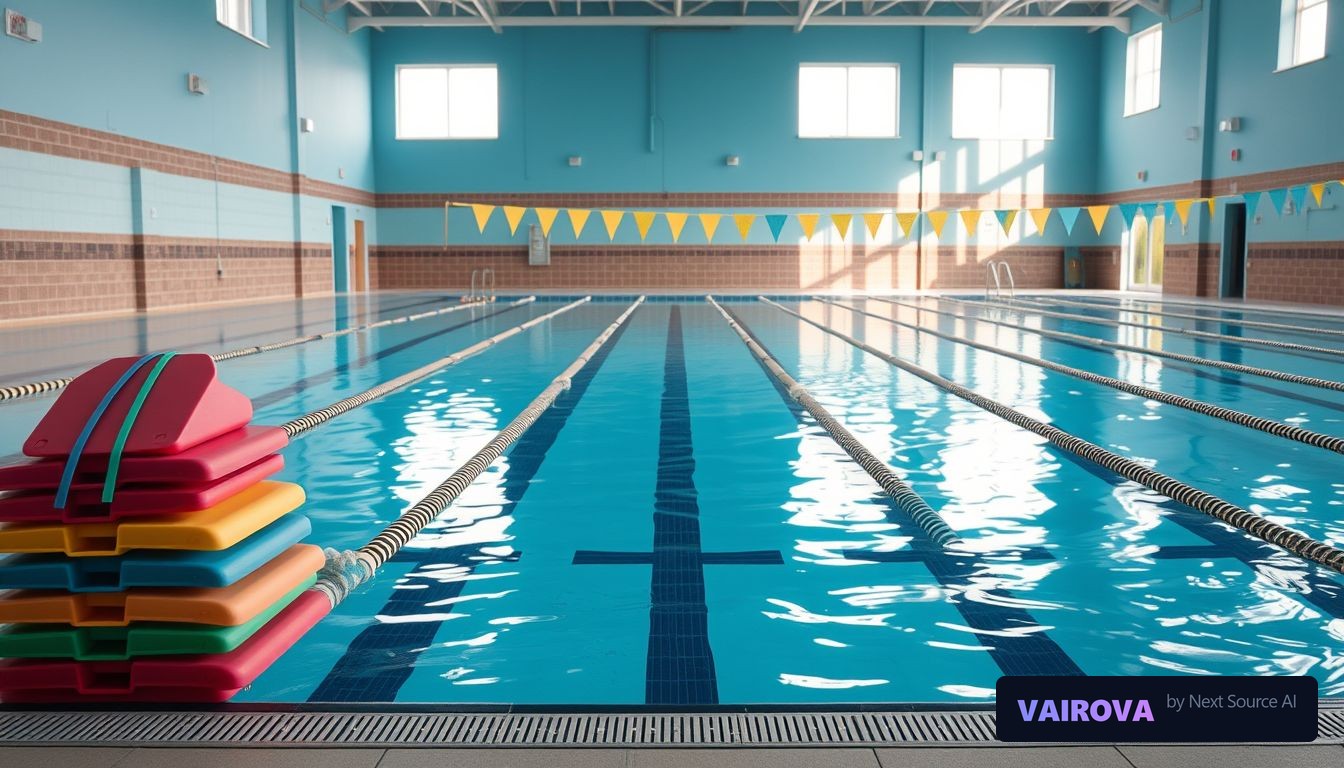
Changing village layouts, viewing galleries, parking and the walk from reception to the pool all answer first-visit questions. Moreover, an empty-pool tour filmed at opening time looks calm and inviting.
Use Equipment as the Hero
Floats, noodles, sinking rings and colourful badges make bright, child-free visuals. For example, a "what each badge means" clip, filmed as a flatlay, explains progression while keeping the feed safe.
Let Parents Speak for You
A parent talking about their child's progress, filmed by the parent or in your reception with written consent, is powerful. Additionally, it shows results without footage of the child in the water.
Consent and Safeguarding
Follow Your Governing Body
In England, Swim England's Wavepower sets out safeguarding policy, including photography. In the US, USA Swimming's Safe Sport programme sets standards for member clubs. Even if you are a private school outside these bodies, their guidance is a sensible baseline.
Get Written, Specific Consent
Photos of identifiable children are personal data under UK GDPR, as the GOV.UK data protection guidance explains. Therefore, ask parents to choose separately between internal use, a private parents' group and public social media. Record each choice and honour withdrawals quickly.
Never Name or Locate a Child
Full names, school logos on towels and lesson times together can identify a child. So, use first names only with consent, or none at all. Moreover, the NSPCC photography guidance site has practical guidance on sharing images of children safely.
Set Clear Poolside Phone Rules
Parents filming their own child often catch other children too. As a result, publish a simple viewing-gallery policy and remind families before each term. Our social media policy for employees guide helps you set rules for staff phones as well.
Content That Fills Classes
Answer Parent Questions Directly
"What age should my child start?", "What if they are scared of water?" and "What should they bring?" are the questions you hear daily. Therefore, film each answer as a short teacher-led clip and save them to Instagram Highlights.
Post Openings and Waiting Lists
A post saying "two spaces in Saturday 9am beginners" converts better than a general invite. Furthermore, waiting-list sign-up links let you capture demand for future terms.
Share Water Safety Tips
Seasonal advice before summer holidays is helpful and widely shared. The Royal Society for the Prevention of Accidents and the American Red Cross publish guidance you can point to. Keep tips general and never suggest lessons make a child "drown-proof".
Explain Your Programme
Parents compare schools by structure. So, explain your levels, class sizes and teacher qualifications clearly. In the UK, many schools follow the Swim England Learn to Swim Programme, and saying so helps parents compare.
A Term-Time Routine
Batch Before Term Starts
Film a month of clips in one empty-pool session. For instance, record four teacher drills, a pool tour and three parent-question answers in an hour.
Post Three Times a Week
Three posts a week is realistic for a small team. Additionally, a private parents' group can carry class news and approved photos that should never go public.
Learn From Similar Businesses
Dance and martial arts schools face the same child-image questions. Our guides on social media for dance studios and social media for martial arts schools offer useful parallels, and social media for schools covers consent forms.
A Practical Example
The Situation
Consider an illustrative swim school in Ohio running lessons at two hotel pools, charging $25 a lesson. Its Instagram showed children in the water, and two parents had recently complained. Meanwhile, Saturday beginner classes still had empty spaces.
The Change
The owner removed all public child photos and moved them to a private parents' group with recorded consent. Instead, the public feed showed teacher drills in an empty pool, badge explainers and weekly class openings. Every post linked to the booking page.
The Result
Within one term, Saturday beginner classes filled and a waiting list started for the next term. Parents also mentioned the careful approach when they enrolled. Results like this are illustrative and depend on location, pricing, pool access and consistency. Nevertheless, child-free public content proved it could still fill classes.
How Vairova Can Help
Vairova writes hooks and captions, turns teacher-led and empty-pool clips into short-form videos and auto-posts to TikTok and Instagram on a schedule. Therefore, your class openings and parent answers go out on time while your team is in the water. Start your free Vairova trial, or compare plans on our pricing page.
Conclusion
Social media for swim schools works when teachers, the pool and parents tell the story, and children stay off public feeds. Above all, put consent and safeguarding first. If you want your term-time posts handled for you, a free Vairova trial is a simple place to start.
Frequently Asked Questions
Q: What should social media for swim schools show?
A: Social media for swim schools should show teachers, the pool, equipment and parent stories rather than children in the water. Furthermore, class-opening posts turn interest into bookings.
Q: Can a swim school post photos of children in lessons?
A: Only with clear, written parental consent for that specific use. However, many schools keep such images to a private parents' group.
Q: Do I need consent under UK GDPR to post a child's photo?
A: Identifiable photos are personal data, so you need a lawful basis, and consent is the usual one. Therefore, record each parent's choice.
Q: Should parents be allowed to film during lessons?
A: That is your decision, but set a clear written policy. Moreover, remind families not to post other children.
Q: What content gets parents to book swim lessons?
A: Answers to common worries, clear class openings and teacher demonstrations work well. Additionally, a waiting-list link captures future demand.
Q: Which platform suits a swim school best?
A: Instagram and Facebook suit most local schools because many parents use them. Similarly, a Google Business Profile helps families find you nearby.
Disclaimer
This article is general guidance current as of November 2026 and is not legal or safeguarding advice. The Ohio swim school example is illustrative. Data protection, safeguarding and platform rules differ across US states and the UK and can change. Therefore, confirm details with Swim England, USA Swimming, the NSPCC, the ICO or your state authorities, and each platform's help pages. No marketing approach guarantees enrolments.