Social Media for Massage Therapists: Fill Quiet Slots Without Overclaiming
Introduction: What Social Media for Massage Therapists Is Really For
Social media for massage therapists has one practical job: filling the appointment slots that sit empty each week. A solo therapist rarely needs a huge following. Instead, they need enough local people who trust them to book the Tuesday afternoon gap. Put simply, massage therapy social media is the planned use of short video and posts to show your approach, set expectations and turn local viewers into regular clients.
Most therapists post calming photos of oil bottles and candles, plus the odd discount. However, those posts rarely explain what a session feels like or who it suits. This guide covers the content that books appointments, the claims rules that catch therapists out, privacy and boundaries, a weekly plan and a worked example.
Content That Books Appointments
Social Media for Massage Therapists Starts With the First Visit
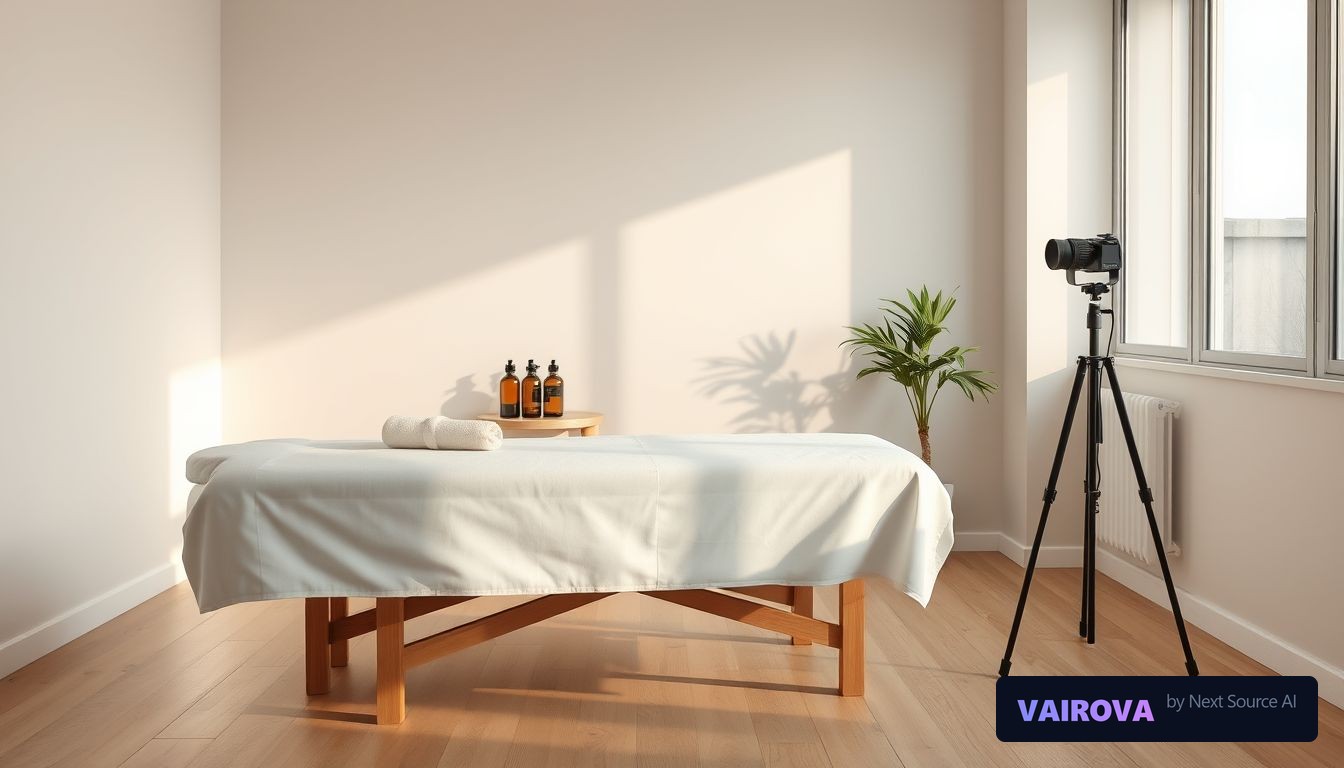
New clients worry about the unknown. So, a short walkthrough of the room, the intake form and how draping works answers questions before anyone asks. Consequently, nervous first-timers feel ready to book.
Explain Each Treatment in Plain Words
Many people cannot tell deep tissue from sports massage or a relaxation session. Therefore, make one short video per treatment that says who it suits, what pressure to expect and how long it lasts. Save these to Instagram Highlights so they stay easy to find.
Share Aftercare and Self-Care
Simple stretches between sessions, posture tips for desk workers and hydration reminders are useful and easy to film. Moreover, they keep you in view between appointments. Keep advice general and suggest a doctor for anything that sounds like an injury.
Name the Gaps in Your Diary
A post saying "two slots left on Thursday evening" converts better than a vague invitation. Additionally, link directly to your booking page from your profile and your Google Business Profile.
Claims: Stay Inside Your Scope
Why Claims Matter So Much
Massage is a health-adjacent service, so advertising rules apply strictly. In the UK, the CAP Non-broadcast Code requires robust evidence for objective claims. The Advertising Standards Authority has ruled against therapists who claimed to treat medical conditions without proof.
Words to Handle Carefully
Phrases such as "cures sciatica", "detoxes the body" or "treats anxiety" are claims you would need to prove. In contrast, "many clients find it relaxing" or "may help ease everyday muscle tension" describe experience without promising outcomes. Therefore, write captions as if a regulator will read them.
The US Licensing Picture
Most US states license massage therapists through a state board, and those boards set scope of practice and advertising rules. The Federation of State Massage Therapy Boards links to member boards. Similarly, the US Federal Trade Commission expects health claims in ads to be backed by competent evidence.
The UK Registration Picture
Massage therapy is not regulated by law in the UK. However, the Complementary and Natural Healthcare Council runs a voluntary register, and some councils, including many in London, require a special treatment licence. Only claim memberships you actually hold.
Privacy, Consent and Boundaries
Never Film a Client Without Written Consent
Clients are often partly undressed and in a vulnerable moment. As a result, the safest default is to film demonstrations on a colleague or model who has signed a release. Our customer testimonial videos guide covers consent for reviews.
Treat Health Details as Sensitive Data
Intake forms hold health information. Under UK GDPR, health data is special category data, and the GOV.UK data protection guidance sets out the rules. In the US, HIPAA may apply if you bill health insurance electronically, so check your position before sharing any client story.
Keep Every Frame Professional
Massage content can be misread or misused. Therefore, keep draping visible, lighting bright and captions clinical. Consequently, your posts protect your reputation and attract the clients you actually want.
You Do Not Have to Be the Face
Some therapists prefer not to appear on camera. Hands, the room and voiceover work well, and our guide to growing without showing your face explains the approach.
A Weekly Plan That Fits Around Clients
Film in One Block
Choose a quiet hour each week and film three short clips in one go. For example, record one treatment explainer, one stretch and one room tour. That hour covers the week.
Post Three Times, Reply Daily
Three posts a week is realistic for most solo therapists. Furthermore, replying to comments and messages within a day turns interest into bookings faster than posting more.
Track Bookings, Not Likes
Count how many new clients mention social media each month. Our social media KPIs guide helps you choose measures. Additionally, compare how full your diary is before and after.
Learn From Peers in Related Fields
Physiotherapists and chiropractors face similar claims and privacy questions. So, our guides on social media for physiotherapists and social media for chiropractors offer useful parallels.
A Practical Example
The Situation
Consider an illustrative solo therapist in Austin, Texas, charging $95 for a 60-minute session. She worked 22 sessions a week but had about eight empty slots. Her posts were mostly stock spa photos with a discount code.
The Change
She filmed a room walkthrough, four treatment explainers and weekly desk-stretch clips on a colleague. Every caption avoided medical claims. Each Monday, she posted the week's open slots with a booking link.
The Result
After three months, she filled about five of the eight empty slots each week. At $95 a session, that added roughly $475 a week. Results like this are illustrative and depend on location, pricing, competition and consistency. Nevertheless, clear content and careful claims made booking easier for new clients.
How Vairova Can Help
Vairova writes hooks and captions, turns your clips into short-form videos and auto-posts to TikTok and Instagram on a schedule. Therefore, your explainers and open-slot posts keep running while you are with clients. Start your free Vairova trial, or compare plans on our pricing page.
Conclusion
Social media for massage therapists works when it explains the experience, names the open slots and keeps every claim within scope. Above all, protect client privacy and keep each frame professional. If you want your weekly posts handled for you, a free Vairova trial is an easy place to start.
Frequently Asked Questions
Q: What should social media for massage therapists include?
A: Social media for massage therapists should include first-visit walkthroughs, treatment explainers and open-slot posts. Furthermore, aftercare tips keep you in view between sessions.
Q: Can massage therapists claim to treat pain or anxiety?
A: Only with robust evidence and within your scope of practice. In the UK the ASA enforces this, and in the US state boards and the FTC set the rules.
Q: Do I need a client's permission to post a video of their massage?
A: Yes, always get written consent first. However, filming a colleague or model is the safer choice.
Q: Is massage therapy regulated in the UK?
A: No, it is not regulated by law. Nevertheless, the CNHC runs a voluntary register, and some councils require a special treatment licence.
Q: Which platform is best for massage therapists?
A: Instagram and a Google Business Profile suit most local practices. Additionally, TikTok can work well for stretch and aftercare videos.
Q: How often should a massage therapist post?
A: Three posts a week is enough for most solo therapists. Moreover, quick replies to messages matter more than extra posts.
Disclaimer
This article is general guidance current as of November 2026 and is not legal, medical or data protection advice. The Austin therapist example is illustrative. Licensing, advertising and privacy rules differ across US states and the UK, and platform features change. Therefore, confirm details with your state board, the ASA, the CNHC, your local council and each platform's help pages. No marketing approach guarantees bookings.